
The True Cost of Concealed vs. Surface-Mounted Blinds
Have you just seen a quote for concealed electric blinds and are now staring at the number, wondering, "Why on earth is it so much more just to hide it?"
It's a question I hear all the time, and it's a completely fair one. You've invested so much heart and soul into designing your dream extension with those stunningly clean lines, and the last thing you want is an unexpected cost forcing a compromise you'll regret.
Before we get into the detail, let's be clear on the core principles. Understanding this difference is the key to making a confident decision for your home.
The Price is in the Process: The higher cost isn't for the blind itself, but for an integrated construction process involving multiple trades and specialist materials.
Preservation vs. Addition: A concealed blind preserves your home's architectural integrity, while a surface-mounted blind is an addition that can compromise it.
It’s a One-Time Decision: True concealment has to be planned at the design stage. It’s a decision that cannot be easily reversed or added later.
The Goal is Zero Compromise: The investment is for those who want to achieve their design vision without any visual intrusion, protecting the aesthetic of their space.
Two Blinds, Two Different Philosophies: Preservation vs. Addition
Let’s be honest, the price difference can be a genuine surprise. It's natural to feel you're being asked to pay a premium for 'invisibility'—for something you can't even see.
But what I've seen time and again is that this isn't really a choice between two types of blinds.
You're choosing between two entirely different approaches to finishing your home: adding a product to a room, or preserving the original architecture.
As specialists who believe shading should be part of the architecture from day one, we want to peel back the curtain and show you exactly what each approach entails.
The Anatomy of an 'Addition': Why Surface-Mounted Blinds Cost Less
The most common approach, especially in a finished home, is a surface-mounted blind. It’s a product that is fixed onto an existing wall or ceiling.
The components are straightforward:
The Headbox/Cassette: This is the aluminium box you see at the top that houses the rolled-up fabric and motor.
Mounting Brackets: These are simple fixtures that attach the headbox to the surface.
Side Channels: For blackout blinds, these are visible aluminium tracks that run down the sides of the window recess.
This method is less expensive because it's a relatively simple, post-construction activity. It’s a self-contained product that gets added to a finished surface, requiring minimal pre-planning or coordination with any other trades.
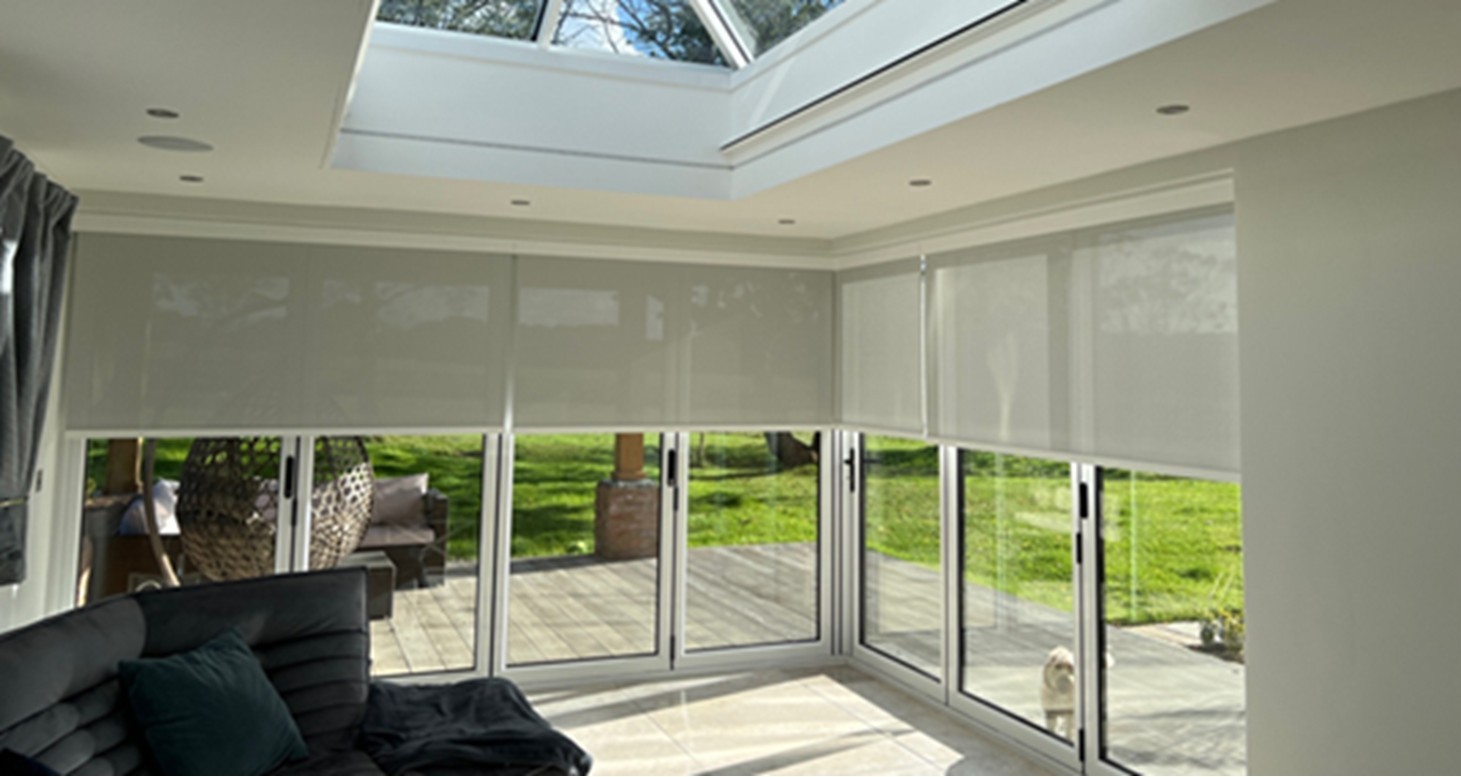
The Engineering of 'Preservation': Where the Investment in Concealment Really Goes
So, if a surface-mounted blind is a simple addition, a concealed system is more like a minor piece of construction.
Honestly, the cost is in the process, not just the product. Accepting this approach means committing to three things from the outset: a higher initial budget, early-stage decisions you can't make later, and the management of a team effort.
1. It Starts on the Drawing Board: Early-Stage Planning
For a truly invisible finish, the decision must be made during the architectural design phase.
This is where the 'Architectural Intent' pillar of our S.H.A.D.E. framework is so important. I've always believed that great design happens when you consider everything from the start.
It’s about deciding to protect the clean lines of your home from the very beginning, treating light control as a fundamental part of the architecture itself.
2. Building the 'Blind Space': Structural Work & Specialist Materials
This early planning allows for the physical work to happen. A structural pocket has to be created in the ceiling or wall where the blind will eventually live.
This requires specialist components like Blindspace® boxes, which are precision-engineered aluminium profiles installed within the structure. They are designed to be plastered over, creating a perfectly seamless finish with only a discreet slot visible.
3. A Team Effort: The Hidden Costs of Multi-Trade Coordination
A surface-mounted blind is installed by one person. A concealed system requires a team.
The builders must create the opening. The electrician needs to run power to this hidden location. The plasterer then has to skim up to the box to make it invisible.
Finally, our fitters arrive to install the blind itself. This coordination across different trades adds complexity, time, and cost that simply doesn’t exist with the simpler approach.
4. The Fear of the Unknown: "But What Happens If It Breaks?"
This is a perfectly valid concern. You're embedding something into the fabric of your home, and the last thing you want is to have to rip the ceiling open for a repair. We get it.
The good news is that these systems are designed specifically for serviceability. The closure panels on Blindspace® boxes, for instance, are removable, giving full access to the blind and motor for maintenance.
When you combine this with the proven reliability of high-quality motors, the risk of a disruptive future problem is extremely low.
An Inspiring Example: The Architect's Secret Star-Gazing Ceiling
For some homeowners, preserving the design dream is non-negotiable. The value of concealment becomes crystal clear when you hear the story of Pavla, an architect, and her husband Piers, an engineer.
They were renovating their home and had a very specific vision for their master bedroom: to lie in bed and look directly up at the night sky through a large roof light.
The challenge was how to achieve this while also allowing for total blackout for sleep. A standard electric roof lantern blind with its visible cassette and side channels would have completely ruined the minimalist aesthetic. It would have created a permanent, intrusive frame around their view of the stars.
Honestly, the very idea of adding a clunky box to their clean, white ceiling was unthinkable; it would have felt like a constant compromise on their unique vision.
The solution was to integrate a completely concealed blackout blind. During the build, a recess was created in the ceiling. Now, when not in use, the blind is completely invisible. At the touch of a button, the fabric glides out of the hidden slot to create what feels like a solid, dark ceiling.
For them, the extra investment wasn't an extravagance; it was an essential, non-negotiable part of making their special, one-of-a-kind dream a reality.

So, What Should You Expect to Invest? An Honest Look at Industry Pricing
Okay, let's talk numbers. Please remember that the following are indicative costs to give you a helpful ballpark figure. Every project is different, but this will give you a sense of the investment required.
For a concealed roof lantern blind (approx. 2m x 3m), you might expect the total investment, including the concealment box, blind, motor, and multi-trade installation, to be in the region of £8,000 - £9,000.
For concealed blinds for bifold doors (approx. 4m wide), a project of this nature, requiring the Blindspace® system and two high-performance electric blinds, would likely fall into a similar range of £4,500 - £6,500.
Our bespoke, high-performance systems sit within this premium, specialist category. The final price depends on the exact size, your choice of fabric, and the installation's complexity, but this gives you an honest starting point.
Your Questions, Answered
"Are there high-quality surface-mounted blinds?"
Absolutely. There are some excellent premium surface-mounted systems. However, they are still 'additions'.
They cannot achieve the complete architectural integration and total invisibility that a concealed system provides, which remains the ultimate choice for a truly minimalist aesthetic.
"Am I paying for something that will just be a hassle later?"
Quite the opposite. Think of this as investing to avoid future hassle and regret.
By choosing a lower-cost option that compromises your aesthetic from day one, you risk long-term dissatisfaction. A properly planned, high-quality concealed system is about getting it right, permanently, and protecting the joy you get from your home's design.
Bringing It All Together
Choosing between these two options comes down to what you value most. The higher cost of a concealed system is a direct reflection of the work required to protect your home's design.
How to Decide If It's Right for You
Ask yourself these honest questions:
On a scale of 1 to 10, how much would seeing a plastic or metal blind box on your wall or ceiling bother you every single day?
Is preserving the clean, uncluttered lines of your new space a 'nice-to-have', or is it a 'must-have' for you to feel your investment was worth it?
If your answers lean towards 10 and 'must-have', then you're not just paying to hide a blind. You're investing in ensuring your home lives up to the dream you had for it, with zero compromise.
Planning early is the key to seamlessly integrating comfort and control into your home. If you're at the design stage or simply want to understand the possibilities for your space, we're here to help.
Call one of our specialists for a friendly chat on 01256 345580, or book a virtual appointment to explore the options for your home.
