The S.H.A.D.E. Principle for Architects
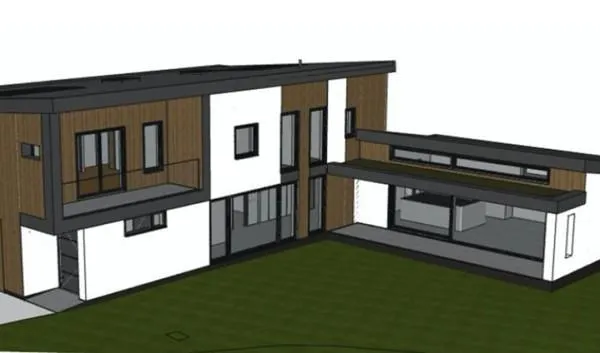
As architects, you meticulously craft spaces that are visually stunning and flooded with natural light.
Large expanses of glazing, from striking roof lanterns to panoramic sliding doors are hallmarks of contemporary design, forging a vital connection between interior and exterior.
But what happens when this abundance of light turns from an asset into a liability?
This is where the S.H.A.D.E. principle comes into play.
At WindowTreat, we believe that shading is not merely an accessory or an afterthought; it's an integral component of architecture itself.
We’ve seen too many beautiful designs compromised, and too many homeowners’ dreams diminished, because the interplay of glass and shading wasn't considered from day one.
The result?
Spaces that become uncomfortably hot, suffer from overwhelming glare, or where the only solution is to deploy blinds that obscure the very views the glazing was intended to celebrate.
Think of it like a high-performance sports car. It might be bold, powerful, and full of promise, but without effective controls, without brakes , it's potential is compromised.
Similarly, glazing without considering shading can lead to an unfinished building, one that doesn't fully deliver on its experiential promise.
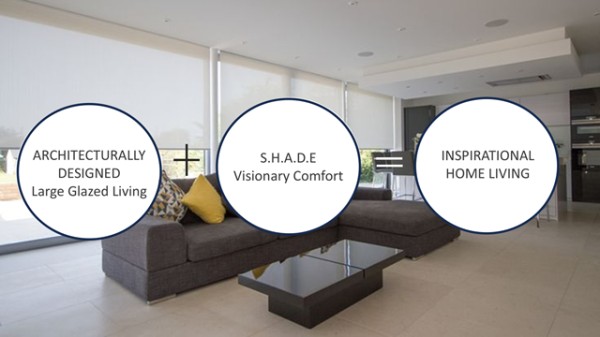
S.H.A.D.E. is our framework for a better way to build with glass. It's a forward-thinking approach that treats light and comfort as fundamental architectural elements, ensuring that the spaces you design not only look spectacular but feel exceptional to live in.
Let's break down what S.H.A.D.E. stands for:
S – Shading Deserves to Be Designed
Shading is as essential as the glazing it complements. It’s the control that gives form to feeling, purpose to beauty, and comfort to your architectural vision. When designed in early, shading holds the line, keeping light where it belongs and carrying the intended experience from the drawing board into lived reality. In a warming world, this isn't just good design; it's an architectural responsibility.
H – Human-Centred Design
Architecture serves people, shaping how we move, feel, work, and rest. Unfiltered light, however, can distort that experience, interfering with focus, disrupting circadian rhythms, and robbing spaces of calm. S.H.A.D.E. protects the way people live within your creations. It’s about filtering glare, preserving views, and balancing brightness with softness to support visual, thermal, and emotional well-being. This aligns with standards like WELL and BREEAM 01, but more importantly, with the fundamental human need to feel at ease.
A – Architectural Intent
Every line, every junction, every reveal in your design has purpose. If shading is left too late, that meticulous detailing can be diluted by visible headboxes, clumsy retrofit solutions, and compromised linework. The design you crafted with precision doesn't arrive on site intact.
S.H.A.D.E. ensures it does. By planning for concealment from the outset, blinds become invisible when not in use, ensuring no visual clutter, no noise, no compromise. Good shading doesn’t interrupt architecture; it allows it to breathe.
D – Direct the Light
Glazing is an opportunity, but uncontrolled, it can become a liability. This is often where buildings fail experientially. Rooms designed to impress become un-liveable at certain times of day because the client pays for every square metre but can only comfortably use some of it.
Your vision is created, but only partially lived in. S.H.A.D.E. changes this by giving you, the architect, control over how light enters, where it lands, and how it behaves.
Glazing and shading are designed together, not in opposition. Visionary comfort isn’t cheap, but compared to unusable space, it’s a bargain.
E – Environmental Performance
Sustainability lives in the details, and effective shading is a critical one. S.H.A.D.E. helps a building work in harmony with its climate by cutting solar gain in summer, retaining warmth in winter, and reducing the load on mechanical systems. This directly improves EPC outcomes, strengthens Part O compliance for overheating, supports BREEAM Ene 01 credits, and contributes to RIBA 2030 Climate Challenge targets. Beyond certifications, it’s about delivering real-world performance that lasts, because thermal comfort isn’t just a line in a specification; it’s what your client will remember every single day.
By embracing the S.H.A.D.E. principle, you can ensure that your architectural vision is fully realised – creating spaces that are not only breathtakingly beautiful but also exceptionally comfortable, functional, and sustainable. It’s about moving shading from an afterthought to a forethought, transforming it from a potential problem into an integral part of the solution.
Planning early is key to seamlessly integrating comfort and control into your designs.
To explore how the S.H.A.D.E. framework can support your next project from its earliest stages, book in a video call here. Alternatively, you can call the WindowTreat team on 01256 345580 for an initial chat, or message WindowTreat via our contact page to arrange a video call and explore the possibilities.
